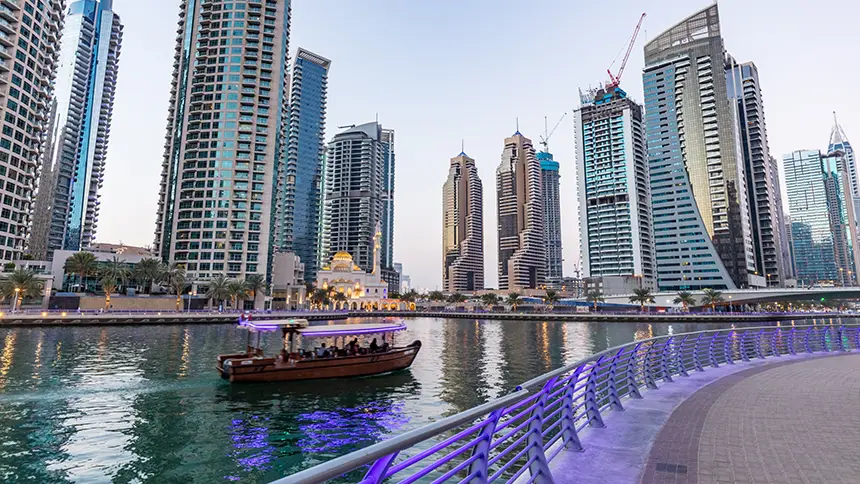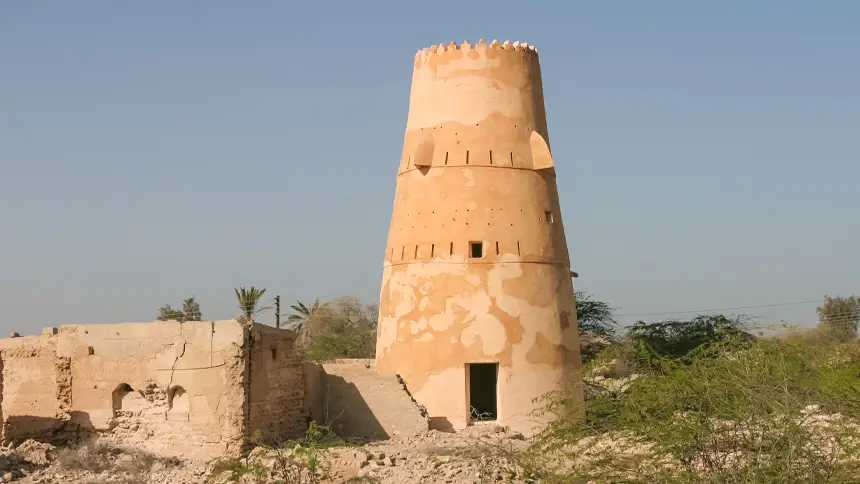
The United Arab Emirates has a long and fascinating history that dates back thousands of years, long before modern cities and tall buildings were built. Archaeological discoveries across the country have helped us learn about how people lived in ancient times. These findings show that early settlers in the UAE were farmers, fishermen, and traders who built strong communities and connected with other civilizations like Mesopotamia and the Indus Valley. Ancient tools, pottery, and tombs found at different sites tell us about their daily life and culture. These discoveries are very important because they help us understand how people survived and developed in the desert environment. The UAE’s modern success is built on this deep and proud history. By studying and protecting these ancient sites, we can see the strong link between the past and the present, showing how tradition and progress go hand in hand.
Early Civilizations in the UAE
The history of the United Arab Emirates goes back to the Stone Age, around 125,000 years ago, when early humans first lived in this region. Archaeologists have found stone tools, pottery, and shells that show how people hunted, fished, and gathered food near the coast and oases. Places like Jebel Faya in Sharjah and Jebel Buhais have given important evidence of these early settlements. The UAE’s location between Asia, Africa, and the Middle East made it a perfect meeting point for ancient trade routes. Traders from Mesopotamia (Iraq), Persia (Iran), and the Indus Valley (India and Pakistan) traveled through the region, exchanging goods such as pearls, pottery, spices, and metals.
The sea also played a big role, as the Arabian Gulf allowed ships to connect the UAE with distant lands. Because of this, early civilizations in the UAE became skilled in trade, farming, and metalwork. They built small communities near water sources and used early irrigation systems to grow crops. These connections with other cultures helped the people of the UAE learn new ideas, tools, and traditions. The strong trade links and cultural exchange during ancient times laid the foundation for the UAE’s growth as a global trading center today. This shows how the geography and history of the land have always shaped the life and success of its people.
Major Archaeological Sites
Hili Archaeological Park (Al Ain)
Hili Archaeological Park is one of the oldest and most famous historical sites in the UAE. It dates back to the Bronze Age, around 3000 BCE. The park is known for its large circular tombs made of stone and other ancient structures. Archaeologists also found one of the earliest falaj irrigation systems, which shows how people managed water for farming in the desert. Because of its great importance, Hili is part of the UNESCO World Heritage Sites in Al Ain.
Jebel Hafeet Tombs
The Jebel Hafeet Tombs, found on a mountain in Al Ain, are over 5,000 years old. These beehive-shaped graves were built during the early Bronze Age. Inside the tombs, archaeologists found pottery, jewelry, and bones, which tell us about ancient burial customs and how people respected their dead. The site gives a clear picture of the early life and traditions of the region’s first settlers.
Mleiha (Sharjah)
Mleiha is an important archaeological site that once served as a busy trade and cultural center. Excavations there have revealed pottery, coins, tools, and camel skeletons, showing that it was a place for trade and travel. The site connects the UAE’s history to the wider Arabian Peninsula and beyond. It proves that people in the area were part of strong trading networks thousands of years ago.
Saruq Al-Hadid (Dubai)
Saruq Al-Hadid is a fascinating Iron Age industrial site discovered in the Dubai desert. Archaeologists found thousands of weapons, tools, jewelry, and metal artifacts, showing that people living there were skilled metalworkers. The site also shows trade connections with faraway regions, proving that Dubai was an important center of industry and trade even in ancient times.
Ed-Dur (Umm Al Quwain)
Ed-Dur is an ancient port city located in Umm Al Quwain. It was one of the largest settlements on the Arabian Gulf around 2,000 years ago. Archaeologists discovered houses, temples, pottery, glass, and coins from different civilizations, including Mesopotamia and Rome. This shows that Ed-Dur was an active trading hub connecting the UAE to the wider ancient world.
Life in Ancient Settlements
Life in the ancient settlements of the UAE was simple but very well organized. People lived close to water sources like oases and the sea, which helped them survive in the desert environment. Their main jobs were farming, fishing, and trading. Farmers grew dates, wheat, and barley using early falaj irrigation systems to bring water from underground. Fishing and pearl diving were also very common, especially for people living near the coast. Traders exchanged goods such as spices, pottery, and metals with merchants from Mesopotamia, Persia, and the Indus Valley, which helped the UAE become a part of early international trade routes.
The people used natural resources wisely. They built houses from mud, palm leaves, and stones, which kept them cool during hot weather. They made tools from copper and stone, showing their creativity and skill. Communities were usually small, and families worked together to support one another. Every settlement had a leader or chief who helped solve problems and made decisions for the group. Religion and traditions were also important in their daily lives, and people often gathered for social and cultural activities.
Even though life was difficult, the ancient people of the UAE were strong, hardworking, and intelligent. Their ability to adapt to the desert and work together made their communities successful. These early ways of living laid the foundation for the UAE’s modern values of teamwork, trade, and progress.
Archaeological Discoveries and Preservation
The United Arab Emirates takes great pride in protecting and studying its ancient history. The UAE government plays an important role in supporting archaeological work and preserving old sites. Many museums, such as the Louvre Abu Dhabi, Sharjah Archaeology Museum, and Al Ain National Museum, display ancient tools, pottery, jewelry, and tomb models to teach people about early life in the region. The government also works with international experts to explore and protect new archaeological areas in places like Al Ain, Sharjah, and Umm Al Quwain.
Modern technology has made it easier to study and protect these sites. Archaeologists now use drones, 3D scanners, and satellite images to locate and record hidden sites without damaging them. Special chemicals and materials are used to clean and repair fragile objects, keeping them safe for future generations. These efforts help scientists understand how people lived thousands of years ago and what their environment was like.
Preserving cultural heritage is very important because it connects the people of today with their ancestors. It helps students and visitors learn about the UAE’s roots, traditions, and achievements. By protecting these treasures, the country honors its past while inspiring pride in its citizens. The UAE’s strong commitment to archaeology shows that even as it grows into a modern nation, it continues to respect and celebrate the rich history that shaped its identity.
Conclusion
The ancient history of the United Arab Emirates shows the great achievements of its early people, who built strong communities, traded with distant lands, and adapted to life in the desert. Archaeological sites across the UAE, such as Hili, Mleiha, and Saruq Al-Hadid, tell amazing stories about how these early settlers lived, worked, and created. These discoveries connect the past to the present, reminding us that the UAE’s progress today is built on the hard work, creativity, and knowledge of those who came before us. By studying these ancient sites, we learn to appreciate our country’s deep cultural roots and understand how tradition and modern life are linked. It is our duty to value and protect our national heritage so that future generations can continue to learn from it. Preserving these treasures keeps the UAE’s proud history alive and inspires us to build a bright and respectful future.