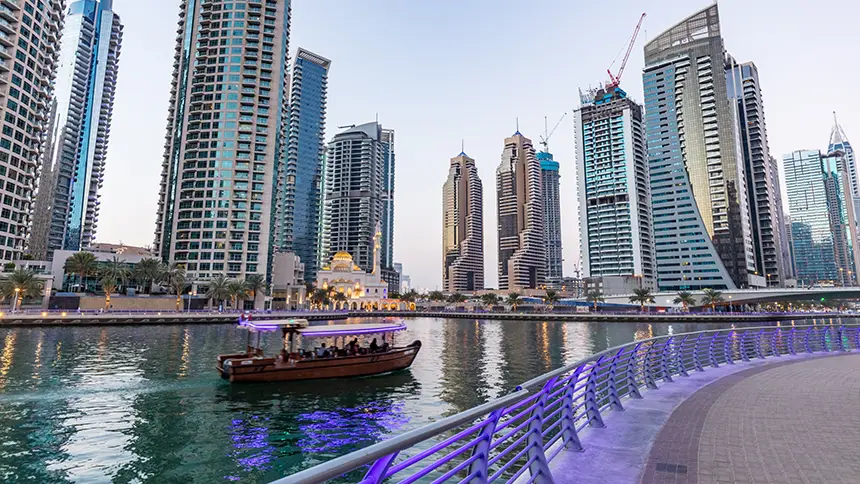
Dubai is often imagined as a city of skyscrapers, luxury shopping malls, and futuristic attractions. While this modern image is true, there is another side to Dubai that reflects its deep cultural and religious roots. At the heart of Emirati traditions stand mosques, sacred places where Muslims gather to pray, learn, and strengthen their sense of community.
With more than 1,500 mosques spread across the city, Dubai is a destination where Islamic architecture and spirituality blend beautifully with modern life. Some masjids are small neighborhood prayer halls, while others are grand landmarks that draw worshipers and tourists from around the world. Exploring these masjids is not only about admiring their artistic beauty but also about understanding the role of faith in shaping Dubai’s identity. Visiting these masjids is one of the most rewarding cultural experiences in Dubai.
The Role of Mosques in Dubai’s Life
In Dubai, mosques or masjids are more than just places to pray, they are an important part of both religious and social life. Muslims pray five times a day, and the call to prayer, known as the adhan, can be heard across the city. On Fridays, the special prayer called Jumu’ah brings large groups of people together. Masjids also act as community centers where people attend religious classes, listen to lectures, and take part in charitable activities. During Ramadan, they play a big role by offering free meals, called iftars, to everyone, no matter their background or religion. These are also a cultural symbol, with their own unique style of architecture. Some are built in traditional designs with domes and arches, while others have modern features that show the city’s mix of old and new. By visiting these mosques, people can see how religion shapes daily life in the city and how values of peace, unity, and hospitality are shared with the community.
Discovering the Mosques
Dubai is home to some of the most beautiful and unique mosques in the region, each reflecting a different story. From the world-famous Jumeirah Mosque to the grand Al Farooq Mosque, the historic Grand Mosque, and other remarkable landmarks, these sacred spaces showcase the city’s blend of tradition, history, and innovation.
Jumeirah Mosque
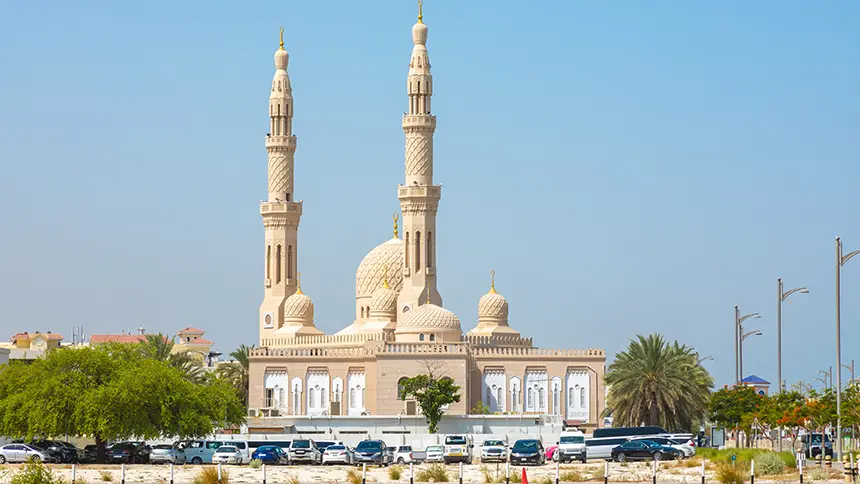
The Jumeirah Mosque is perhaps Dubai’s most photographed Masjid and is often considered a symbol of the city’s Islamic heritage.
- Architectural Style: Built in 1979, reflects the Fatimid style of architecture, which originated in Egypt. Made from white stone, it has two graceful minarets and one large central dome that dominate the skyline. At dusk, golden floodlights highlight its beauty, making it even more stunning.
- Cultural Importance: It is one of the few mosques in Dubai where non-Muslims are welcome inside. This makes it a bridge between cultures, promoting dialogue and understanding.
- Visitor Experience: The Sheikh Mohammed Center for Cultural Understanding (SMCCU) organizes guided tours of the Masjid. Visitors are encouraged to ask questions about Islam, sample traditional Emirati snacks, and observe prayer rituals. Women are offered abayas and scarves if needed.
For tourists who want to take their first step into exploring Islam, Jumeirah Mosque is the perfect introduction.
Al Farooq Omar Bin Al Khattab Mosque
Al Farooq Omar Bin Al Khattab Mosque, often called the “Blue Mosque of Dubai.”
- Architecture and Design: Inspired by the Blue Mosque in Istanbul, this Masjid has 21 domes, four tall minarets, and richly decorated interiors. The use of blue and gold colors, along with calligraphy of Quranic verses, creates a breathtaking space.
- Capacity and Facilities: With room for about 2,000 worshipers, it is among the largest mosques in Dubai. Here it also has a library containing over 4,000 Islamic texts, making it a center for learning.
- Cultural Exchange: welcomes visitors and emphasizes intercultural dialogue. Events are often organized to promote understanding between Muslims and people of other faiths.
Its grand size and artistic detail make this Masjid a true gem for anyone interested in Islamic architecture.
The Grand Mosque
The Grand Mosque, one of Dubai’s oldest places of worship, is located in Bur Dubai near the museum and old souks.
- Historical Roots: The original mosque was built in 1900, rebuilt in 1960, and then renovated again in 1998.
- Striking Features: The Masjid boasts Dubai’s tallest minaret, standing at 70 meters, shaped like a traditional lighthouse. Its 45 small domes and 9 large ones are decorated with beautiful wood carvings and inscriptions.
- Community Role: It can host more than 1,200 worshipers and is particularly significant during Ramadan and Eid celebrations.
Although non-Muslims are not permitted inside the prayer hall, the exterior of the Masjid and its surrounding area offer a glimpse into the historic heart of Dubai.
Other Notable Mosques Worth Visiting
- City Walk Mosque — Modern minimalist design, natural lighting, and geometric patterns, is a fine example of how Dubai blends tradition with modernity.
- Al Salam Mosque — Located in Al Barsha, is known for its striking red-and-white color scheme, with beautiful domes and arches that make it a favorite spot for photographers.
- Khalifa Al Tajer Mosque — Located in Deira, is Dubai’s first eco-friendly Masjid, built with solar panels, energy-efficient systems, and environmentally friendly materials.
- Iranian Mosque — Located near the textile souk in Bur Dubai, is decorated with vibrant Persian tiles in blue, turquoise, and yellow, and its floral patterns and calligraphy make it one of the most colorful masjids in Dubai.
These mosques highlight Dubai’s diversity in architectural expression, from classical designs to sustainable innovations.
Etiquette and Tips for Visiting Mosques
Dubai encourages cultural tourism, but when visiting mosques, respect is essential. Here are key guidelines:
- Dress Modestly: Men should wear trousers and covered shirts. Women should cover their heads, arms, and legs. Many masjids offer abayas and scarves for free.
- Remove Shoes: Shoes must be taken off before entering the prayer hall.
- Avoid Prayer Times: Plan visits outside the five daily prayer times, especially on Fridays.
- Photography Rules: Always ask for permission before taking photos. Some mosques prohibit photography inside.
- Stay Respectful: Keep voices low, avoid eating or drinking inside, and follow instructions from Masjid staff.
By following these simple rules, visitors can enjoy the experience while respecting the sanctity of the place.
Mosques During Ramadan
During Ramadan, the holy month of fasting, Dubai’s masjids turn into vibrant centers of activity. After breaking the fast, long nightly Taraweeh prayers are held, filling the mosques with worshipers and creating a deeply spiritual atmosphere. Many masjids also set up iftar tents to serve free meals at sunset, welcoming everyone regardless of religion or nationality. The city comes alive with decorations, lanterns, and colorful lights, adding to the festive spirit. For visitors, experiencing Dubai during Ramadan offers a unique insight into Islamic traditions and the generosity that defines this special month.
Conclusion
Dubai’s mosques are not only places of worship but also symbols of culture, tradition, and beauty. Visiting these masjids is more than just a cultural activity, it is a journey into the soul of Dubai. It allows travelers to experience spirituality, admire world-class architecture, and understand the principles of peace and community that guide Emirati society.
For anyone visiting Dubai, exploring its mosques is a must. With respect, curiosity, and an open heart, you will leave with not only beautiful memories but also a deeper appreciation of how tradition and modernity coexist in this remarkable city.