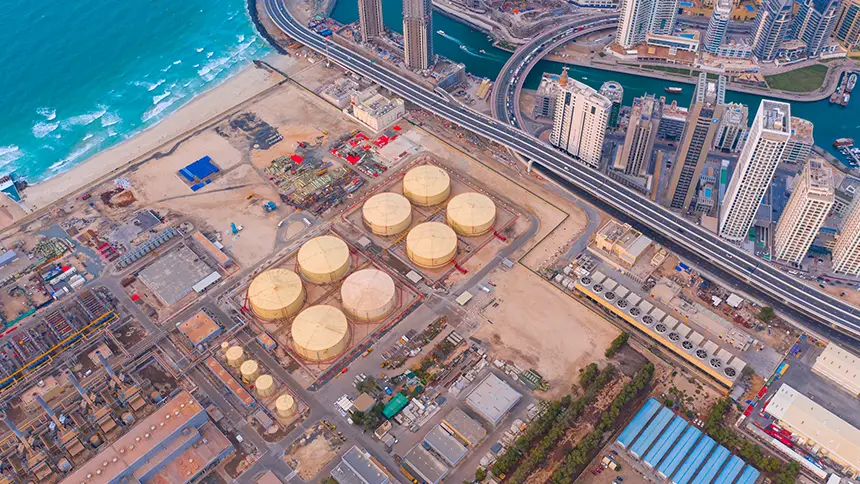
The United Arab Emirates is one of the most dynamic economies in the Middle East. Among its major financial achievements are its two main stock exchanges, the Abu Dhabi Securities Exchange and the Dubai Financial Market. These platforms have become important hubs for investment, capital growth, and international partnerships. They serve as windows into the region’s economic progress, innovation, and investor confidence.
Overview of UAE’s Financial Landscape
The UAE’s economy has transformed from being oil-centered to one that includes technology, tourism, real estate, banking, and logistics. To support this transformation, financial markets were created to help local and global investors buy and sell shares of companies listed in the country.
The UAE maintains a modern, transparent financial system with separate exchanges in Abu Dhabi and Dubai, both regulated by federal authorities. These markets operate under strict rules to protect investors while offering companies a reliable platform to raise capital and expand. Combined with a stable currency, political security, and business-friendly laws, the UAE’s stock exchanges attract strong interest from both regional and international investors.
Abu Dhabi Securities Exchange (ADX)
Founded in 2000, the Abu Dhabi Securities Exchange is located in the capital of the UAE. It focuses on supporting economic diversification and building an efficient market for investment. ADX is known for its solid performance and its contribution to the Emirate’s financial vision.
Main Features
- Ownership: Operates under the Abu Dhabi Developmental Holding Company (ADQ).
- Currency: UAE Dirham (AED).
- Listed Companies: Over 65 firms from various sectors including energy, banking, telecommunications, and real estate.
- Technology: Uses advanced systems for trading and settlement.
- Supervision: Regulated by the Securities and Commodities Authority (SCA).
Sectors Represented
- Banking: Key banks like First Abu Dhabi Bank (FAB) and Abu Dhabi Islamic Bank (ADIB).
- Energy: Companies such as ADNOC Distribution.
- Telecommunications: Etisalat (now e&) plays a major role.
- Real Estate: Aldar Properties is one of the top traded firms.
Performance and Growth
The ADX has steadily enhanced its global reputation through initiatives such as the ADX One Strategy, which boosts market liquidity and draws international investors. It also introduced the FTSE ADX General Index to improve transparency and track overall market performance, while promoting green bonds and sustainable investments to encourage environmentally responsible financing practices.
Why ADX Matters
The ADX serves as a key platform for local companies to raise funds, while promoting public ownership and wider participation in the UAE’s economy. It connects the nation to global financial networks and strengthens investor confidence through transparent practices and strict reporting standards.
Dubai Financial Market (DFM)
Launched in 2000, the Dubai Financial Market represents the commercial heartbeat of the UAE. It reflects Dubai’s ambition to be a world-class financial hub. DFM became a public joint-stock company in 2007, the first of its kind in the region, with shares traded on its own platform.
Key Features
- Ownership: Part of the Dubai Holding Group.
- Listed Firms: More than 60 across sectors such as banking, transport, services, and property.
- Trading Currency: UAE Dirham (AED).
- Supervision: Also regulated by the SCA.
- Investor Base: Includes both local and international participants.
Main Listed Sectors
- Finance: Emirates NBD, Dubai Islamic Bank, and Mashreq Bank.
- Real Estate: Emaar Properties, one of Dubai’s biggest developers.
- Transport: Air Arabia and logistics-related companies.
- Services: Telecommunications and insurance companies.
Innovations and Reforms
Dubai’s stock market stands out for its modern vision and strong digital integration, introducing initiatives such as the Smart Trading System for fast, secure transactions and an Islamic Finance Framework that provides Sharia-compliant investment options. Through the Dubai Sustainable Finance Initiative, it promotes eco-friendly funding and strengthens global connectivity by partnering with Nasdaq Dubai.
Why DFM Stands Out
Dubai’s stock market reflects the city’s openness to global trade, supporting startups and small businesses in listing their shares. It offers investors easy access through digital platforms and stands out in the region by promoting Islamic finance.
Nasdaq Dubai: The International Link
Although based in Dubai, Nasdaq Dubai operates independently while linking both DFM and ADX to global investors. Regulated by the DFSA and located in the Dubai International Financial Center, it provides English-based legal frameworks suitable for foreign participants. Listing regional and multinational companies, bonds, and Sukuk, Nasdaq Dubai bridges Middle Eastern and Western markets, offering investors wider opportunities.
Differences Between ADX and DFM
While both ADX and DFM aim to support the UAE’s financial growth, they differ in focus and structure. ADX, state-owned and based in Abu Dhabi, targets institutional investors and large-cap companies, using the ADX Digital Exchange and regional partnerships. DFM, a public joint-stock company in Dubai, focuses on private firms and retail investors, promoting innovation through the DFM Smart System and close ties with Nasdaq Dubai. Together, they complement each other and strengthen the nation’s overall financial position.
Role of the Securities and Commodities Authority (SCA)
The SCA is the main federal regulator responsible for overseeing both markets. Its goals include:
- Protecting investors through fair practices.
- Ensuring transparency in company reporting.
- Approving new listings and mergers.
- Encouraging the use of technology and global standards.
By maintaining strict supervision, the SCA guarantees that the UAE’s stock markets remain reliable, efficient, and trusted.
Impact on the UAE Economy
The ADX and DFM contribute significantly to national development. Their combined activities help achieve the country’s long-term goals under UAE Vision 2030.
Economic Benefits
The UAE’s stock markets provide significant economic benefits by enabling companies to raise capital for expansion and creating jobs in finance, law, and technology. They support economic diversification, reducing reliance on oil, attract international investors and institutions, and drive innovation through fintech and sustainable finance initiatives.
Social Impact
- Encourages citizens to participate in investing.
- Promotes financial literacy and awareness.
- Builds public confidence in the national economy.
Recent Developments and Future Outlook
In recent years, ADX and DFM have modernized with e-trading, blockchain, dual listings, green bonds, and expanded indices, while plans to list state-owned enterprises have boosted liquidity and global interest. These changes have also strengthened investor confidence and made the markets more attractive to both local and international participants.
Looking ahead, the exchanges aim to drive a knowledge-based, innovation-led economy by expanding digital access, supporting SMEs, using AI for market insights, and promoting sustainable financing, positioning the UAE as a top global financial hub. This future-focused approach is expected to further enhance the country’s financial reputation and economic growth.
Investment Opportunities
Investors are drawn to the UAE stock markets for several reasons:
- Tax-Free Environment: No personal income or capital gains tax.
- Stable Currency: The Dirham’s peg to the US dollar provides security.
- Strong Infrastructure: High-tech systems ensure quick and secure trading.
- Diverse Sectors: Offers access to energy, banking, real estate, and logistics.
- Government Support: Consistent policies that promote growth and openness.
For individuals new to investing, both markets provide user-friendly platforms and educational resources to help understand trading basics.
Conclusion
The Abu Dhabi Securities Exchange and the Dubai Financial Market are the backbone of the UAE’s modern economy. They showcase the country’s commitment to growth, innovation, and transparency. Both serve as gateways for investors who wish to participate in one of the most promising regions globally.
Through strong regulation, advanced technology, and a forward-thinking approach, the UAE’s stock markets have created a bridge between regional development and international finance. Their journey from local trading floors to global financial hubs reflects the nation’s remarkable vision for progress.