Dubai, one of the seven emirates of the UAE, is today seen as a global hub for business, tourism, and innovation. However, just a few decades ago, it was a small settlement dependent mainly on pearl diving, fishing, and trade along the Arabian Gulf. The turning point came with the discovery of oil in the 1960s. Although this city’s crude reserves were smaller compared to its neighbors, the revenue was wisely used to build infrastructure, improve living conditions, and diversify the economy. This forward-looking vision turned this place into the modern city we know today.
Dubai’s Life Before Oil
Before the discovery of oil, Dubai’s economy relied on pearl diving, fishing, and trade. For centuries, pearl diving was the main source of income, while the Arabian Gulf supported families through fishing and small-scale commerce. Thanks to its strategic location, the city grew into a busy port, trading goods like spices and textiles with India, Persia, and East Africa, and attracting merchants with its low taxes. However, the collapse of the pearl industry in the 1930s, along with the Great Depression, brought hardship and poverty. With little infrastructure, healthcare, or education, life was tough until the discovery of Crude oil transformed Dubai’s destiny.
Discovery of Oil
The journey toward the discovery of oil began in the early 20th century, when many international petroleum companies started exploring the Gulf region, attracted by signs of petroleum beneath the desert sands and offshore waters. During this period, Dubai was still a small settlement with very limited resources, and the search for fossil fuels represented hope for a better future.
In the 1930s and 1940s, companies conducted surveys and geological studies in the Trucial States (as the UAE was known before 1971), but results were slow and uncertain. The city granted its first crude concession in 1937 to the Petroleum Concessions Ltd., a consortium of companies led by the Anglo-Persian Petroleum Company (later BP). However, exploration was delayed for many years due to the Second World War and financial difficulties.
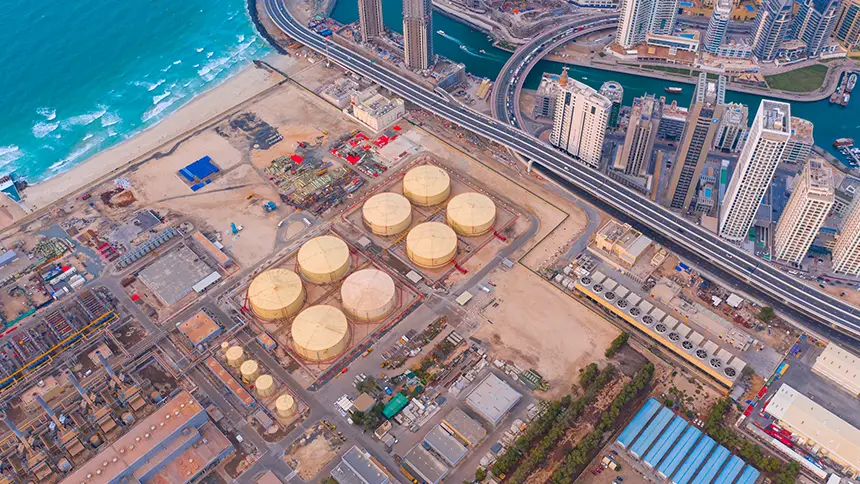
Efforts resumed in the 1950s and 1960s, with drilling taking place both onshore and offshore. Finally, in 1966, Black gold was discovered in the Fateh oil field, located offshore in the Arabian Gulf. This was a historic moment, as it marked Dubai’s entry into the crude era. The discovery immediately attracted attention from international petroleum companies and created optimism among the local population.
In 1969, the first shipment of petroleum was exported from Dubai, opening a new chapter in its history. Under the leadership of Sheikh Rashid bin Saeed Al Maktoum, the revenue from petroleum exports was used to transform the emirate. Unlike other places that depended heavily on fossil fuels, Sheikh Rashid realized that the reserves were limited. His forward-thinking approach ensured that the money was invested in infrastructure, education, healthcare, and projects that would support a diversified economy.
The discovery of petroleum was therefore not just an economic turning point, but also a historical milestone that gave Dubai the means to modernize and prepare for a future beyond oil.
How Oil Transformed Dubai
Infrastructure Development
The discovery of oil provided Dubai with the funds it needed to build modern infrastructure. Petroleum revenues were used to construct roads, bridges, and highways that connected the emirate and supported its growth. Major projects such as Port Rashid (1972) and later Jebel Ali Port (1979) transformed Dubai into an important global shipping hub. At the same time, Dubai International Airport, which first opened in 1960, was expanded with crude income, allowing the city to handle growing numbers of international travelers and paving the way for its future role as a global aviation hub.
Public Services
Fossil fuel wealth also plays a key role in improving the lives of people. The government invested in free education and built modern schools, helping young Emiratis gain the knowledge and skills needed for a modern economy. Healthcare services expanded rapidly with the construction of hospitals and clinics, giving citizens access to advanced medical care. Housing projects were also introduced, replacing the traditional barasti (palm-frond) houses with modern homes, greatly improving living standards across the emirate.
Urban Growth
With oil revenues, Dubai’s small villages began to develop into planned urban communities. Modern facilities such as electricity, clean water, and sanitation were introduced, improving the quality of life. At the same time, new neighborhoods and high-rise buildings began to shape the city, laying the foundation for the iconic skyline that is known for today.
Economic Stability
Perhaps one of the most important impacts of oil was the economic stability it brought. The steady stream of revenue gave Dubai the financial confidence to launch ambitious projects and invest in its future. It also created a secure and attractive environment for foreign investors, further fueling growth and turning the city into a dynamic hub of trade and commerce.
Diversification Beyond Oil
Dubai’s leaders understood early on that oil reserves were limited, so they wisely invested in building other industries to secure the emirate’s future. A strong focus was placed on trade and logistics, with the development of Jebel Ali Port and free trade zones that positioned Dubai as a global shipping hub. Tourism became another powerful driver of growth, with world-famous landmarks such as the Burj Al Arab, Palm Jumeirah, and Burj Khalifa turning the city into a leading international destination. In addition, the city invested heavily in aviation, establishing Emirates Airlines and expanding Dubai International Airport into one of the busiest in the world. The emirate also grew into a regional center for finance and real estate, with projects like the Dubai International Financial Center (DIFC) and large-scale developments such as Dubai Marina and Downtown Dubai, which attracted global investors and reshaped the city’s skyline. Through these initiatives, they successfully reduced its reliance on oil and built a diverse, sustainable economy.
Key Lessons from Dubai’s Oil Journey
Dubai’s experience shows that fossil fuel was only a stepping stone, not the final destination. With limited reserves, the emirate relied on visionary leadership that transformed short-term fossil fuel wealth into long-term growth. By investing in people, infrastructure, and businesses, Dubai created new opportunities beyond petroleum and built a foundation for sustainable progress. Careful planning for the future ensured that the city not only survived after crude revenues began to decline but also continued to thrive as a global hub for trade, tourism, finance, and innovation.
Conclusion
The story of Dubai shows how natural resources can change a city’s fortune, but only if managed wisely. Oil gave Dubai its first push, helping build infrastructure and services. However, it was the leadership’s vision to diversify into trade, tourism, aviation, and finance that truly shaped Dubai’s destiny.