Food is an important expression of Sharjah’s cultural identity and reflects the emirate’s rich traditions and values. In Sharjah, cuisine is closely connected to history, daily life, and the natural environment, showing how people lived in the past and how these traditions continue today. Traditional dishes were shaped by desert and coastal life, using simple ingredients such as rice, fish, dates, and spices. These meals are not just nourishment but part of everyday routines, family gatherings, and special occasions.
Food also plays a key role in Emirati hospitality, as welcoming guests with generous meals is a deeply respected custom. Sharing meals helps strengthen family bonds and community relationships. Today, Sharjah continues to protect its culinary heritage while embracing modern influences. Through its traditional culinary culture, Sharjah proudly preserves its history and shares its values of respect, kindness, and togetherness with visitors and future generations.
Roots of Traditional Emirati Cuisine
Traditional Emirati cuisine in Sharjah has strong roots in the emirate’s desert surroundings and coastal lifestyle. Life in the desert encouraged simple cooking methods and filling meals made from ingredients that could last long, such as grains, dates, and dried meat. At the same time, Sharjah’s long coastline influenced the use of fresh fish and seafood, making them an important part of daily meals.
Historic trade routes also played a key role in shaping Emirati culinary traditions, as traders brought spices, rice, and cooking ideas from India, Persia, and East Africa. These influences added rich flavours to local dishes while keeping traditional cooking styles intact. Emirati cuisine mainly uses locally available ingredients, which reflects respect for nature and resourcefulness. Together, desert life, coastal living, and trade connections created a unique gastronomic heritage that continues to represent Sharjah’s cultural identity today.
Signature Dishes That Tell a Story
Machboos – A Symbol of Family Gatherings
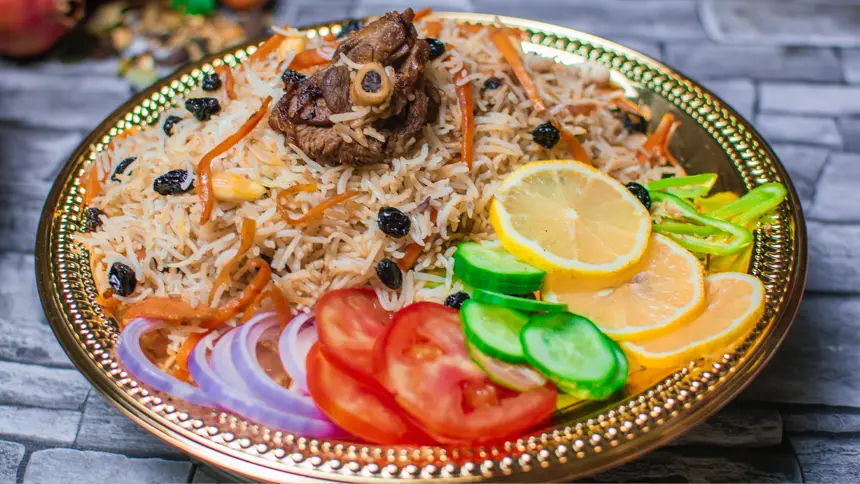
Machboos is one of the most popular traditional dishes in Sharjah and is strongly linked to family gatherings and social occasions. It is made with spiced rice, meat or fish, and fragrant ingredients such as cardamom and saffron. Machboos are often prepared in large portions and shared during family meals, reflecting togetherness and hospitality in Emirati culture.
Harees – A Dish Linked to Ramadan and Celebrations
Harees is a simple yet meaningful dish commonly eaten during Ramadan and special celebrations. Made from wheat and meat cooked slowly until smooth, it represents patience, unity, and generosity. Harees are often shared with neighbours and guests, highlighting the caring spirit of Emirati traditions.
Thareed – Comfort Food with Cultural Significance
Thareed is a comforting dish made of bread soaked in meat and vegetable stew. It has cultural importance as it was traditionally eaten during hard times, showing resourcefulness and warmth in Emirati daily life.
Ingredients That Define Sharjah’s Food Culture
Sharjah’s food culture is defined by simple yet meaningful ingredients that reflect its history and lifestyle. Rice is a staple ingredient and forms the basis of many traditional Emirati dishes, often served with meat or fish. Dates hold special importance as they are widely grown in the region and are commonly eaten daily or offered to guests as a sign of hospitality. Fish is popular because of Sharjah’s coastal location, while meat such as lamb and chicken is used for family meals and celebrations.
Aromatic spices like saffron, cardamom, and cinnamon add rich flavour and pleasant aromas without overpowering the dish. These spices also show the influence of ancient trade routes. Emirati cooking methods are usually simple, such as slow cooking and steaming, which allow deep flavours to develop naturally. Together, these ingredients create traditional cuisine that is nutritious, flavourful, and closely connected to Sharjah’s cultural heritage.
Food and Social Traditions
Food plays an important role in Sharjah’s social traditions and helps bring people together. Sharing meals is a valued custom in Emirati culture, as it strengthens family bonds and builds a sense of unity within the community. Meals are often enjoyed together at home, especially during weekends and special gatherings. Food also has a special role during festivals and religious occasions such as Ramadan and Eid, when traditional dishes are prepared and shared with relatives, neighbours, and those in need.
This practice reflects kindness, generosity, and respect for others. The majlis culture is another key part of Sharjah’s social life, where guests are welcomed warmly with traditional refreshments, dates, and coffee. Offering hospitality in the majlis shows honour and generosity. Through these traditions, shared meals become more than nourishment; they become a way of expressing care, culture, and togetherness in Sharjah.
Cultural Influences Beyond Borders
Sharjah’s culinary traditions have been shaped by many influences from beyond its borders, making them rich and diverse. Due to its historic role as a trading centre, Sharjah welcomed people and ideas from India, Persia, and other Arab regions. Indian spices added warmth and depth, Persian cooking styles introduced fragrant rice dishes, and Arab traditions strengthened the practice of shared meals and hospitality. Over time, these influences blended naturally with Emirati recipes while still preserving traditional flavours and cooking methods.
This careful balance allows Sharjah to celebrate new tastes without losing its cultural identity. As a cultural crossroads, Sharjah’s culinary landscape reflects its openness to different communities and traditions. Today, this blend of flavours can be seen in both traditional homes and modern restaurants. Through its gastronomy, Sharjah continues to tell a story of cultural exchange, respect, and unity across borders.
Modern Dining with Traditional Roots
Modern dining in Sharjah successfully blends traditional Emirati cuisine with contemporary styles. Many restaurants now serve classic recipes such as machboos, harees, and thareed with modern presentation, making them appealing to younger generations and visitors. This approach helps keep traditional dishes relevant in today’s fast-changing world. Food festivals and cultural events in Sharjah also play an important role in celebrating local cuisine. These events allow people to taste traditional dishes, learn cooking methods, and understand their cultural meaning.
By showcasing Emirati cuisine in public spaces, Sharjah encourages pride in its heritage. Preserving heritage through cuisine is important because culinary traditions carry stories, values, and history. By continuing to prepare and promote traditional recipes in modern settings, Sharjah protects its cultural identity while welcoming innovation. This balance ensures that Emirati cuisine remains alive, meaningful, and appreciated by future generations.
Conclusion
Food remains a living and meaningful part of Sharjah’s cultural heritage, connecting the past with the present. Traditional Emirati dishes continue to be prepared in homes, restaurants, and cultural events, keeping long-standing customs alive. At the same time, Sharjah has found a healthy balance between tradition and a modern lifestyle by adapting classic recipes to suit today’s tastes without losing their original value. This balance allows younger generations to appreciate their roots while enjoying contemporary dining experiences.
Emirati cuisine acts as a cultural storyteller, sharing stories of desert life, coastal traditions, trade influences, and strong family values. Each dish reflects history, hospitality, and community spirit. By preserving culinary traditions and celebrating them in modern settings, Sharjah ensures that its culture is passed on with pride. Through its cuisine, Sharjah continues to express its identity and share its rich cultural story with the world.