The Al Dhafra Festival is a famous cultural event in the United Arab Emirates that celebrates the country’s rich desert heritage and strong connection with camels. Held every year, this traditional celebration highlights the importance of camels in Emirati life, both in the past and the present. For centuries, camels have been known as the “ships of the desert” because they helped people travel, carry goods, and survive in the harsh desert environment. Even today, camels remain a symbol of pride, tradition, and national identity in the UAE. The event takes place in the Al Dhafra region of Abu Dhabi, usually during the winter months when the weather is pleasant. It attracts camel owners, families, and visitors from across the country and neighbouring regions. Through competitions, cultural activities, and traditional displays, this heritage celebration plays an important role in preserving Emirati culture and passing it on to younger generations.
History and Background of Al Dhafra Festival
The Al Dhafra Festival began as an important cultural initiative to protect and promote the traditional heritage of the United Arab Emirates. It was first organised to provide a dedicated platform where camel owners and breeders could come together to celebrate their shared traditions. The origin of this cultural initiative is closely linked to the UAE’s efforts to preserve its desert culture at a time when modern life was rapidly changing the country. The main purpose behind establishing the event was to encourage the continued care, breeding, and appreciation of camels, which have always played a central role in Emirati history.
Along with camel competitions, this traditional gathering was designed to revive traditional customs, crafts, and social values that were once a part of everyday Bedouin life. Over the years, the celebration has grown into a major cultural event that helps keep Emirati heritage alive. By showcasing folk arts, traditional practices, and community gatherings, this annual occasion ensures that younger generations understand and respect their cultural roots while celebrating the nation’s proud past.
Importance of Camels in Emirati Culture
Camels have always held a very important place in Emirati culture, especially in the harsh desert environment of the UAE. In the past, camels played a vital role in everyday life, helping people travel long distances across the desert, carry heavy loads, and provide milk, meat, and wool. Because of their ability to survive with little water and withstand extreme heat, camels were essential for the survival of Bedouin communities. Over time, they came to represent strength, patience, and endurance, making them powerful symbols of heritage and national pride.
Even today, camels are respected as a living connection to the UAE’s history and traditions. In modern times, camels also have great economic and cultural value. They are involved in camel racing, beauty competitions, tourism, and breeding programmes, which support local livelihoods. Cultural celebrations such as this desert heritage event help keep camel culture alive, reminding people of their historical importance while celebrating their continued role in Emirati society.
Major Attractions of the Festival
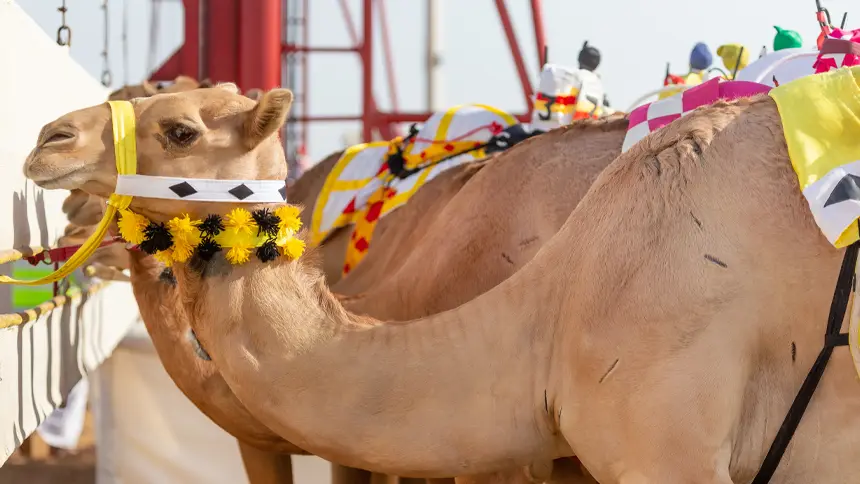
One of the major attractions of the Al Dhafra Festival is its exciting range of competitions and traditional activities that bring Emirati culture to life. The camel beauty competitions are the main highlight, with camels divided into different categories based on age and breed. Judges carefully assess each camel using traditional criteria such as body shape, head size, posture, and overall appearance. Camel owners from across the UAE and other Gulf countries take part, making the event highly competitive and prestigious. Alongside these competitions, the celebration also features a variety of traditional heritage activities that reflect desert life.
Falconry displays show the strong bond between humans and birds of prey, a skill passed down through generations. Saluki dog races highlight ancient hunting traditions, while folk music and dance performances add colour and energy to this cultural gathering. Together, these attractions create an enjoyable and educational experience for visitors, helping them understand and appreciate the rich cultural traditions of the UAE in a fun and engaging way.
Cultural and Heritage Exhibitions
The cultural and heritage exhibitions at this traditional event play an important role in showcasing the traditional way of life in the United Arab Emirates. These exhibitions allow visitors to learn about old customs that were once a part of everyday desert living. One of the main attractions is the display of traditional crafts and handicrafts, where skilled artisans show how items such as baskets, pottery, jewellery, and household tools were made using natural materials. Weaving and embroidery demonstrations are especially popular, as they highlight the patience and creativity involved in making traditional clothing and decorative fabrics.
Visitors can watch craftswomen carefully weaving patterns and stitching designs that have been passed down through generations. Storytelling and oral traditions also form an important part of the cultural programme. Elders share folk tales, poems, and stories that reflect Emirati values, history, and life in the desert. These exhibitions help preserve cultural knowledge and ensure that younger generations understand and respect their rich heritage.
Heritage Market and Local Cuisine
The heritage market and local cuisine at this desert celebration offer visitors a lively and colourful experience of traditional Emirati life. The market is designed like a traditional souq, where narrow pathways and small stalls create an old-fashioned shopping atmosphere. Visitors can walk around, interact with local sellers, and learn about traditional trading practices. The souq also gives people the chance to taste a variety of local Emirati food and beverages. Popular items include dates, Arabic coffee, fresh bread, and traditional dishes that reflect the flavours of desert life.
Alongside the food stalls, many shops sell handmade products and souvenirs such as perfumes, textiles, jewellery, and camel-themed items. These products are often made using traditional methods, making them special keepsakes for visitors. The heritage market not only supports local artisans and small businesses but also helps preserve traditional skills and customs. Through its sights, tastes, and sounds, this festive marketplace brings Emirati culture closer to people of all ages.
Community and Tourism Impact
The Al Dhafra Festival has a strong impact on both the local community and tourism in the United Arab Emirates. Families from different parts of the country visit the event together, making it a popular social occasion where people of all ages can enjoy cultural activities. Visitors, including tourists from other countries, come to learn about Emirati traditions and experience desert culture first-hand. This makes the celebration an important part of cultural tourism, as it attracts people who are interested in heritage, history, and traditional lifestyles. By offering competitions, exhibitions, and markets, this cultural platform helps promote the UAE as a country that values and protects its cultural roots. At the same time, the event creates a sense of pride among Emirati citizens by celebrating their customs and traditions in a public way. This heritage gathering also strengthens national identity by reminding people of their shared history and values. Through community participation and tourism, the celebration brings people together while preserving the cultural spirit of the nation.
Conclusion
The Al Dhafra Festival is a meaningful celebration that highlights the rich cultural value of the United Arab Emirates. It brings together traditional competitions, heritage exhibitions, and community activities that reflect the deep connection between Emirati people and their desert roots. The celebration plays an important role in preserving camel heritage, reminding younger generations of the vital part camels once played in daily life and continue to play in modern culture. By promoting traditional skills, customs, and values, this cultural landmark helps keep these traditions alive in a rapidly developing society. The event has also become a recognised symbol of heritage, attracting families, visitors, and tourists from across the region. It stands as a sign of national pride and cultural identity, showing how the UAE respects its past while moving confidently towards the future. Through such celebrations, Emirati heritage remains valued, celebrated, and protected for generations to come.