The United Arab Emirates has become known for modern skylines, luxurious resorts, and world-class attractions. Yet the country also has a deep cultural story that stretches far beyond futuristic architecture. Many historic landscapes, quiet natural zones, and old settlements show how people lived, traded, and travelled through the region long before the skyscrapers appeared. Because of this rich past, several locations are being considered as future UNESCO World Heritage Sites. These places highlight archaeology, the environment, traditional skills, and community memory. They also open new paths for travellers who want to see the Emirates from a different angle.
Khor Fakkan Cultural Landscape
Khor Fakkan, found on the eastern coast of the UAE, has a long relationship with the sea. Surrounded by mountains and beaches, this area shows a mix of natural beauty and old human activity. Terraced fields, ancient water systems, and stone structures tell stories of early farming and seasonal living.
Tourism Appeal
Travellers enjoy Khor Fakkan because it offers something different from the large cities:
- Quiet coastal villages
- Hiking paths that pass through old farming terraces
- Traditional stone houses
- Views of the Arabian Sea and rugged cliffs
For visitors who love gentle adventure and heritage in one place, this region feels like a peaceful escape.
The Al Dhafra Desert Archaeological Zone
The far western region of the UAE, known as Al Dhafra, holds several archaeological discoveries that reveal how communities survived in desert conditions. Stone tools, early houses, and natural formations make it a fascinating open-air history book. Some parts of this landscape are millions of years old.
Tourism Appeal
This zone attracts explorers, desert photographers, and people interested in early life in Arabia.
- Wide sand plains that change colour at sunset
- Fossil sites
- Ancient camps used by early tribes
- Wildlife sightings, especially near protected areas
Tour operators often include educational journeys that explain geology and human development. These trips add depth to desert travel.
Dubai Creek Heritage Zone
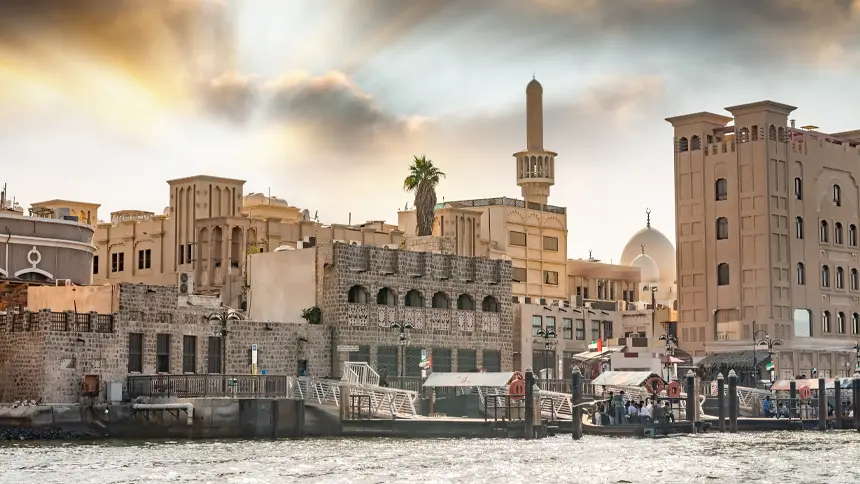
Dubai Creek was once the heart of trade in the region. Long before the city became a global centre, this waterway supported merchants from across Asia and East Africa. The creek shaped settlement patterns, business traditions, and the movement of goods like pearls, spices, and textiles.
Tourism Appeal
Today the zone provides a look into old Dubai. Visitors can explore:
- Traditional markets
- Wooden boats called abras
- Restored merchant homes
- Museums showing daily life along the waterfront
The blend of old streets, cultural museums, and small cafés makes the area a strong candidate for recognition in the future. It also helps travellers understand how the Emirate grew from a harbour town into a major centre for commerce.
Sharjah’s East Coast Rock Art Sites
High in the mountains of Sharjah’s east coast, several rock walls carry carvings that show animals, people, and symbols made thousands of years ago. These markings are important because they show communication styles, local beliefs, and the early connection between humans and nature in the region.
Tourism Appeal
These sites attract those who enjoy quiet landscapes and ancient messages:
- Mountain walks
- Guided heritage tours
- Small museums with displays about early artists
- Viewpoints overlooking valleys
Travellers often find the stillness of the mountains refreshing. It is a pleasant stop for anyone exploring the east-coast towns.
Al Ain Oases Expansion Areas
The Al Ain Oases are already recognised as part of a UNESCO heritage site. However, several surrounding zones could also become candidates because they include old palm farms, irrigation channels, and historic houses linked to early settlement patterns.
Tourism Appeal
These extensions help visitors understand the farming world that sustained life in the region for centuries.
- Shaded walking paths
- Cool irrigation tunnels
- Hand-built mud structures
- Educational centres introducing farming traditions
People often describe the oases as one of the calmest attractions in the country. With the expansion areas, the storytelling becomes even richer.
Ras Al Khaimah’s Pearl Fishing Settlements
Pearl diving shaped the UAE’s economy and culture before oil and modern industries. Several old villages along the coast of Ras Al Khaimah hold remains of houses, community centres, and diving equipment used by early pearl traders.
Tourism Appeal
These places are valuable for travellers who like coastal heritage and quiet towns.
- Remains of stone houses
- Displays of pearl-diving tools
- Beaches where diving boats once gathered
- Cultural workshops led by local historians
Many visitors appreciate the authenticity of these communities. They help people imagine a life guided by the sea and seasonal trade.
Sir Bani Yas Cultural and Natural Network
Sir Bani Yas Island has both environmental and cultural value. Known for wildlife reserves and ancient Christian monastery remains, the island demonstrates peaceful co-existence between nature and human history. The combination of archaeology and conservation gives the location a strong future position for UNESCO listing.
Tourism Appeal
The island offers:
- Wildlife drives
- Mountain viewpoints
- Sea-based activities
- Walks that stop at old monastery walls
Visitors often enjoy the mix of animals, history, and calm beaches. It is one of the few places in the country where nature and heritage blend smoothly.
Hatta Mountain Heritage Belt
Hatta is known for its striking mountains, blue lakes, and restored old village. The wider heritage belt around Hatta includes farms, watchtowers, and early road paths. These assets help explain human movement between the highlands and lowlands.
Tourism Appeal
Hatta has become a major destination for both adventure and culture.
- Kayaking, cycling, and hiking
- Stone houses showing mountain life
- Traditional food stalls
- Workshops on pottery, weaving, and farming
Because the area balances tourism with respect for heritage, it stands out as a possible future candidate.
What Makes These Places Strong Candidates?
- Cultural Depth – Each site reveals how people once lived, worked, travelled, and built their traditions in harmony with the land.
- Scientific Value – These sites help researchers study early life, land changes, and how communities developed over time.
- Education Opportunities – These places offer tours and learning spaces that help people understand the Emirates more deeply.
- Sustainable Travel Potential – These destinations promote mindful travel and help spread visitors across the country instead of only in big cities.
- Strong Preservation Efforts – Local efforts and community programs help preserve these landscapes and heritage sites for the future.
How These Candidate Sites Benefit Tourism
- New Travel Routes – UNESCO recognition could create new cultural routes across the country, giving travellers longer and more varied experiences.
- Richer Storytelling – Every candidate site holds unique stories. Sharing them increases visitor interest and supports cultural pride.
- Balanced Tourism Growth – By spreading travellers across several regions, the country reduces pressure on popular centres and increases opportunities for local communities.
- Better Global Visibility – UNESCO listing, or consideration, boosts global interest, attracting travellers to the UAE’s history and nature.
- Community Participation – Heritage programs engage locals, creating workshops, small businesses, and guided experiences.
Conclusion
The UAE is known for innovation and progress, yet its deeper story lives in quiet valleys, mountain paths, palm groves, coastal villages, and old trade routes. The candidate sites highlighted in this article show how much cultural and natural wealth the country holds beyond its modern image. These places may not yet be official UNESCO World Heritage Sites, but they already enrich tourism through history, education, and beauty.
For travellers, exploring these zones adds meaning to a journey. Each site offers a chance to see how early communities adapted to the region, how they worked with the land, and how their traditions still shape life today. As the UAE continues to protect these places, they could one day receive global recognition. Until then, they remain valuable destinations for anyone who wants a peaceful, thoughtful, and memorable travel experience.