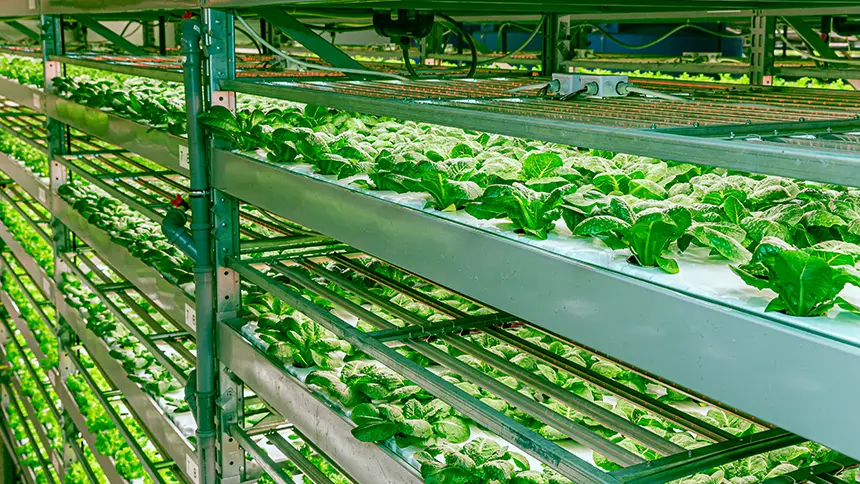
Artificial Intelligence (AI) and robotics are bringing a new change to the dining experience in the United Arab Emirates. In recent years, the UAE has seen the rapid emergence of automated food service, where robots and smart systems help in serving meals, taking orders, and even preparing dishes. This transformation is happening because there is a growing demand for innovation in the hospitality industry, as customers today are excited to experience something modern, fast, and unique. Restaurants and cafés are using technology not only to improve service but also to make dining more enjoyable and efficient. The UAE has always been known for adopting advanced technology, and now it is becoming a global leader in tech-driven dining. By blending food with futuristic solutions, the country is creating a smart and exciting restaurant culture that sets a new example for the rest of the world.
Current Applications of AI and Robotics
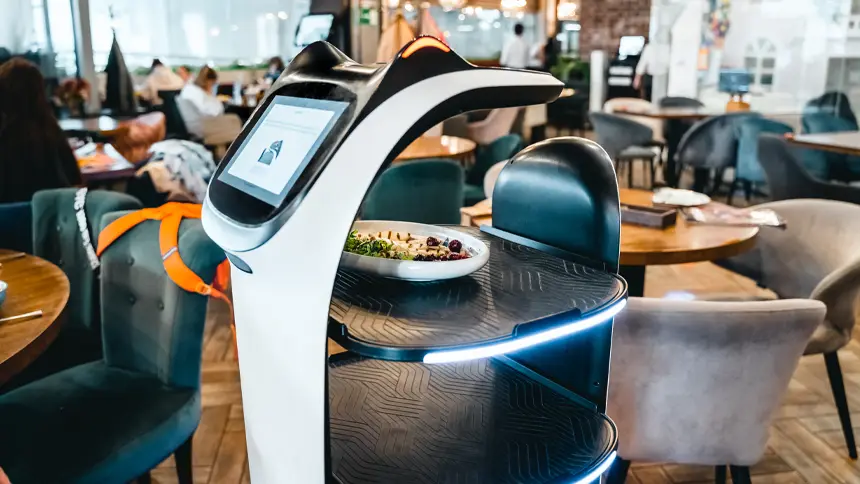
Today, many restaurants in the UAE are using Artificial Intelligence and robotics to make their services faster and more efficient. One of the most noticeable examples is the use of robot waiters for table service and food delivery, which move smoothly around the restaurant to serve dishes without delays. These robots help reduce waiting time and give customers a unique and futuristic dining experience. Another important development is the introduction of AI-powered ordering systems and smart menus, where customers can place orders using digital screens or apps that suggest meals based on their tastes and dietary needs.
Inside the kitchen, robotic cooking systems are becoming popular, as they can prepare dishes with high accuracy and consistency. This helps maintain the same flavour and quality every time. In addition, restaurants are now using automated cleaning and inventory management, which ensures that the dining area stays clean and that ingredients are always available without manual checking. These technological applications show how AI and robotics are transforming restaurants in the UAE, making them more organised, modern, and customer-friendly.
Benefits for Restaurants and Customers
The use of Artificial Intelligence and robotics in UAE restaurants brings many benefits for both restaurants and customers. One of the main advantages is faster, more consistent service, as robots and AI systems can deliver food quickly and perform tasks without getting tired, ensuring that every customer receives their order on time. Another important benefit is improved hygiene and contactless dining, which has become very popular since people want safer and cleaner dining experiences. Automated systems reduce direct human contact, making restaurants healthier and more comfortable for guests.
For restaurant owners, these technologies also help in cost reduction and high operational efficiency because fewer staff are needed for routine tasks, and machines can work continuously without breaks. Additionally, AI ensures enhanced accuracy in orders and food preparation, reducing mistakes in serving dishes or mixing ingredients incorrectly. Finally, restaurants can offer personalized meal recommendations through AI, suggesting dishes based on customer preferences, dietary needs, or previous orders. This makes dining more enjoyable and tailored to individual tastes. Overall, AI and robotics create a modern, efficient, and customer-friendly dining experience in the UAE while supporting restaurant growth and quality.
Popular Examples in the UAE
The United Arab Emirates has become a hub for restaurants that are using Artificial Intelligence and robotics in exciting ways. Many cafés and dining outlets now feature robot-assisted service, where robots take orders, serve food, and even clear tables. These robots are especially popular in Dubai and Abu Dhabi, attracting tourists and locals who want a unique dining experience. Another interesting example is the use of AI-designed recipes and digital “chef” platforms, such as AI systems that suggest new dishes or flavour combinations, which chefs then prepare. These innovations allow restaurants to create menus that are creative, consistent, and personalised for customers.
Additionally, several restaurants use smart self-service kiosks and digital menus, allowing diners to place orders easily without waiting for a human waiter. Some fast-food and casual dining outlets are also testing automated kitchens and robotic cooking machines, which prepare meals quickly and accurately. These examples show how restaurants in the UAE are combining technology with hospitality to provide modern, efficient, and enjoyable dining experiences. By integrating AI and robotics, these establishments are not only improving service but also establishing themselves as leaders in futuristic and tech-driven dining.
Impact on the Hospitality Industry
The introduction of Artificial Intelligence and robotics is having a major impact on the hospitality industry in the United Arab Emirates. Traditional restaurant models are being transformed as more establishments adopt automated systems for ordering, cooking, and serving food. This shift is creating a hybrid workforce, where robots handle repetitive tasks while human staff focus on customer service, creativity, and personalised experiences. The changes are also improving efficiency, allowing restaurants to serve more customers in less time without compromising on quality. In addition, the use of AI and robotics is opening opportunities for new tech-driven dining experiences, such as futuristic cafés, robot-themed restaurants, and AI-designed menus.
These innovations attract tourists and locals who are looking for something different, helping restaurants stand out in a highly competitive market. Moreover, the adoption of technology is encouraging sustainability, as AI can help reduce food waste and optimise the use of ingredients. Overall, the impact of AI and robotics goes beyond faster service; it is reshaping the way restaurants operate, how chefs work, and how customers enjoy their meals. The UAE is becoming an example for other countries on how technology can modernise the hospitality industry.
Future Outlook
The future of dining in the United Arab Emirates looks very exciting, as fully automated smart restaurants are expected to become more common. In these restaurants, robots and AI systems could manage almost every aspect of service, from taking orders to cooking and serving meals, creating a seamless and efficient dining experience. At the same time, AI will play a major role in menu optimisation and food waste reduction, helping restaurants plan dishes based on customer preferences, seasonal ingredients, and ingredient availability. This will make food preparation more sustainable and reduce unnecessary waste, benefiting both businesses and the environment.
Another important trend is the increased role of personalized dining experiences, where AI can suggest dishes or create menus tailored to each customer’s tastes, dietary needs, or previous orders, making each visit unique. Furthermore, robotics will continue to be a key feature in tourism and luxury hospitality, offering visitors futuristic and memorable dining experiences that are unlike anything found in other countries. Overall, the future outlook shows that AI and robotics will not only improve efficiency and sustainability but also make dining in the UAE more innovative, personalised, and attractive to tourists and locals alike.
Conclusion
Artificial Intelligence and robotics are set to reshape food service in the United Arab Emirates, transforming the way restaurants operate and how customers enjoy their meals. These technologies offer faster, more consistent service, improved hygiene, and more efficient operations, making dining more modern and enjoyable. However, it is also important to maintain a balance between automation and human hospitality, as the warmth and personal touch of human staff remain essential for creating a welcoming environment. While robots and AI can handle routine tasks, human interaction is still needed for creativity, customer care, and managing special requests. Overall, technology in UAE restaurants is not just about speed or convenience; it is also about enhancing the overall dining experience. By combining innovation with traditional hospitality, restaurants can provide unique, efficient, and personalized services that satisfy both locals and tourists. The UAE is showing the world how the future of food service can be both high-tech and customer-friendly.