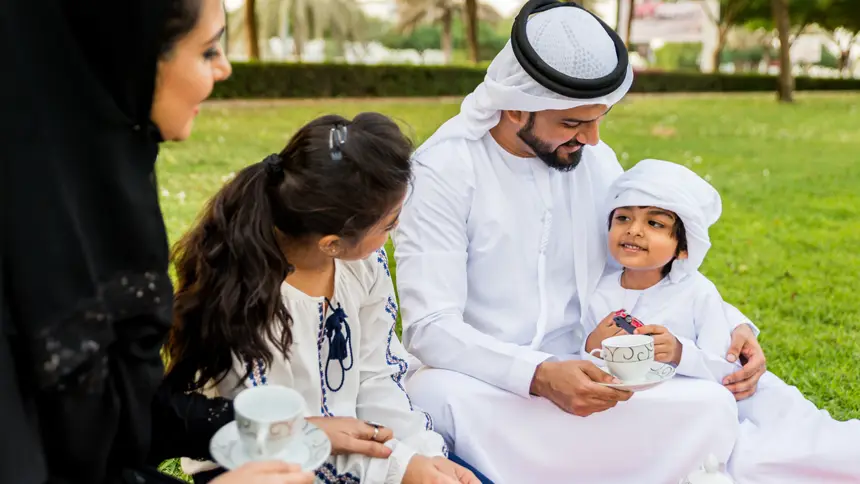
Family is the foundation of life in the United Arab Emirates. It shapes the way people live, make decisions, and connect with each other. In Emirati society, family is not just a social unit, it is a source of strength, respect, and cultural identity. Every generation carries forward traditions that keep families close and communities united.
The Heart of Emirati Culture
For Emiratis, family lies at the heart of life, offering emotional strength, moral direction, and a sense of balance. From an early age, people learn that home ties come before personal interests, a belief deeply rooted in tradition and shared experiences. Respect for elders, strong unity, and pride in lineage reputation form the foundation of Emirati values. Though modern life and global influences have brought change, the spirit of togetherness and loyalty continues to guide how families live and connect in the UAE.
Structure of the Traditional Family
The traditional Emirati family is typically extended, including parents, children, grandparents, uncles, aunts, and cousins who share close bonds and mutual support. The father or grandfather often serves as the head of the household, while mothers play a key role in nurturing children and preserving cultural traditions. In the past, homes were built near one another, allowing daily interaction and shared life. Though modern lifestyles have brought change, the emotional closeness and strong sense of unity among kin members remain an essential part of Emirati life.
Core Family Values
Several key values shape Emirati domestic life. They are reflected in behavior, social customs, and even the way people interact with strangers.
Respect
Respect is at the heart of all relationships. Younger members show it through polite language, modest behavior, and listening carefully to their elders. Decisions are made after consultation, showing mutual regard and appreciation.
Loyalty
Loyalty binds families together through thick and thin. Members support one another emotionally and financially when needed. A person’s success is shared by the entire family, while challenges are faced collectively.
Hospitality
Generosity is considered both a duty and a joy. Welcoming guests warmly reflects the honor of the household. Whether offering Arabic coffee, dates, or a full meal, hospitality is seen as an expression of kindness and respect.
Faith
Religion plays a guiding role in shaping domestic relationships. Islamic principles encourage compassion, honesty, and fairness. Families pray together, celebrate religious festivals, and teach moral values rooted in faith.
Modesty
Humility in dress, speech, and behavior is appreciated. Members of the household are encouraged to act with dignity, maintaining privacy and integrity in personal and social life.
Family and Everyday Life
In Emirati households, daily life centers around shared moments that strengthen home bonds. Mealtimes bring everyone together to talk and connect, while frequent visits to relatives keep relationships close. Family celebrations such as weddings, births, and religious festivals involve all generations, reflecting deep unity. When challenges arise, members support one another through care, guidance, and assistance. These traditions remind every individual that their kin is not just a part of life but the heart of belonging and togetherness.
Marriage and Family Bonds
In Emirati society, marriage is both a personal achievement and a social connection that brings families together. Traditionally arranged within the same tribe or community to preserve heritage, marriages today often include love matches, though parental approval remains deeply respected. Wedding celebrations are grand, symbolizing happiness and unity, and newlyweds receive strong family support during their early years. More than the union of two individuals, marriage represents the joining of two families, enriching social ties and strengthening community bonds.
The Role of Women in Family Life
Women in Emirati families hold a position of deep respect and influence, serving as both nurturers and leaders. Traditionally, they preserved customs, taught values, and maintained harmony at home, while today they also contribute actively to fields such as education, healthcare, business, and government. Balancing tradition with modern achievement, Emirati women continue to pass on cultural identity, lead community initiatives, and pursue professional success, reflecting a graceful harmony between heritage and progress.
The Influence of Modern Life
Rapid urbanization, technology, and global communication have introduced new lifestyles to the UAE. Families now live in apartments, travel abroad, and use digital tools for daily interaction. These changes bring convenience but also challenges.
Positive influences
- Easier communication among family members living apart.
- Better educational opportunities for children.
- Broader awareness of global cultures, leading to tolerance and open-mindedness.
Challenges faced
- Busier work schedules reduce household time.
- The risk of younger generations losing touch with traditional customs.
- Increased influence of social media on behavior and expectations.
Despite these shifts, Emirati families remain determined to preserve their values. Schools, community programs, and national initiatives emphasize the importance of household traditions in maintaining social harmony.
Family Gatherings and Celebrations
Domestic gatherings are a major part of Emirati life. They bring joy, strengthen relationships, and reconnect generations.
Common occasions
- Eid celebrations: Families gather for prayers, meals, and gift-giving. It’s a time of forgiveness and gratitude.
- National holidays: Patriotic events often involve family participation, celebrating unity and national pride.
- Weddings and engagements: Lavish but meaningful, these events symbolize continuity and happiness.
- Ramadan evenings: Families break their fast together, sharing meals and spiritual reflection.
During such gatherings, traditional food, dress, and music create a warm atmosphere where values are lived, not just spoken.
Family’s Role in Social Development
The Emirati family plays a vital role in the nation’s stability and progress by nurturing responsible and respectful citizens who value harmony and cooperation. Through education, parents encourage children to pursue excellence and contribute meaningfully to society. Families also instill a strong work ethic, teaching discipline, honesty, and dedication in professional life. By preserving the Arabic language, cultural heritage, and moral values, they strengthen national identity, while active participation in community service and charitable efforts fosters unity and compassion. This balance of tradition and modern learning forms the foundation of a strong and forward-looking Emirati society.
Preserving Family Values for the Future
With globalization affecting every part of life, the UAE continues to invest in household development programs. Leaders emphasize the importance of keeping cultural identity strong while adapting to change.
Ways to protect traditional bonds
- Education in values: Schools teach respect, responsibility, and empathy alongside academic subjects.
- Media awareness: Local TV and campaigns promote positive images of domestic life.
- Cultural events: Festivals, heritage villages, and storytelling sessions keep younger generations connected to their roots.
- Work-life balance: Policies encourage flexible working hours to allow more home interaction.
By combining innovation with tradition, Emirati families ensure that their values remain alive and relevant in a changing world.
Conclusion
Family values are the soul of Emirati society. They shape people’s behavior, guide decisions, and give life its meaning. Respect, loyalty, faith, and unity continue to define how Emiratis live and connect, even as the nation grows more modern and diverse.
Through every generation, the home circle remains a symbol of love, strength, and identity. It teaches that progress is not about losing the past but carrying it forward with pride. In simple terms, for Emiratis, family is not just part of life, it is life itself.