In the heart of Abu Dhabi stands a monument that beautifully connects the emirate’s proud past with its vibrant present: Qasr Al Hosn, or the White Fort. This iconic landmark is more than just an architectural wonder; it is a symbol of resilience, leadership, and heritage.
Every wall tells a story of courage, community, and transformation. Visitors who step inside are taken on a journey from the days of desert settlements and pearl diving to the modern skyline that now surrounds it. The White Fort continues to be one of the UAE’s most significant cultural treasures, offering travelers a window into the roots of Emirati life.
The Birth of Qasr Al Hosn
The story began in the 1760s when Sheikh Dhiyab bin Isa Al Nahyan, leader of the Bani Yas tribe, ordered the construction of a watchtower to protect a newly discovered freshwater well on Abu Dhabi Island.
The discovery of fresh water transformed the settlement’s destiny. As the settlement flourished, the original tower evolved into a magnificent fortress. In the 1790s, Sheikh Shakhbut bin Dhiyab enlarged it with thick defensive walls, spacious rooms, and elegant courtyards to meet the needs of a growing population.
By the 19th century, the fort had become both the ruler’s home and the center of governance. Traders, travelers, and diplomats from across the Arabian Gulf passed through its gates, greeted with the warmth of Emirati hospitality. The name Qasr Al Hosn, meaning “Palace Fort,” perfectly captured its dual role as both a royal residence and the seat of power.
Architectural Beauty of the White Fort
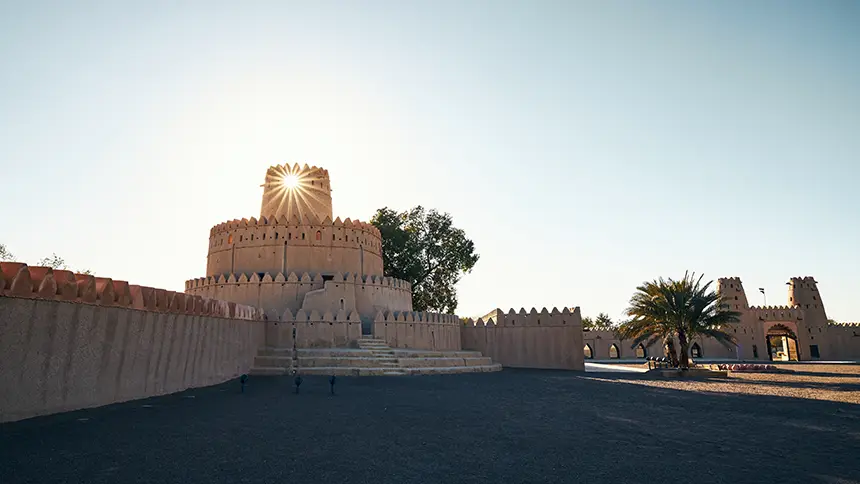
The fort’s design is a masterpiece of both practicality and elegance. Built from coral stones, seashells, and lime mortar, it was designed to withstand desert heat and coastal humidity.
Key architectural highlights include:
- Strong defensive walls that provided safety and stability.
- Four tall watchtowers offering protection and wide visibility.
- Open-air courtyards for ventilation and natural light.
- Carved doors and arches showcasing traditional craft skills.
Its bright white coating, made from a mixture of lime and crushed coral, reflects sunlight, keeping the interior cool while giving it the nickname White Fort. In Emirati culture, the color white symbolizes peace, purity, and strength, values deeply woven into the nation’s identity.
The layout combines Bedouin traditions with Islamic geometry, balancing beauty and function. The arrangement of rooms ensures privacy, while the symmetrical design reflects harmony and cultural artistry.
Qasr Al Hosn: The Heart of Governance
For nearly two centuries, the fortress served as the home of Abu Dhabi’s ruling family and the center of decision-making. Within its walls, leaders discussed trade, security, and regional diplomacy. Messages from neighboring territories were received here, and important agreements were signed that shaped the emirate’s future.
Foreign guests and merchants were welcomed with generosity, a tradition that continues to define Emirati culture today. The fort also hosted community celebrations, family gatherings, and cultural events, standing as a symbol of unity and shared purpose.
This blending of governance, hospitality, and tradition made the fort not only a seat of power but also the heart of community life.
The Age of Change
In the 20th century, Abu Dhabi underwent rapid transformation following the discovery of oil, leading to the expansion of the city and the rise of modern buildings. Despite these changes, Qasr Al Hosn remained the symbolic heart of Abu Dhabi, representing its origins and progress. During the 1940s and 1950s, administrative offices moved out as modernization advanced. By the 1960s, under Sheikh Zayed bin Sultan Al Nahyan’s leadership, this structure became a preserved historical landmark rather than a residence. As the skyline filled with glass towers, this fort was carefully maintained as a national heritage.
Restoration and Renewal
Restoration and Transformation In recent years, a large restoration project returned Qasr Al Hosn to its former glory. Skilled craftspeople and architects studied old photographs, maps, and materials to rebuild damaged areas. The restoration involved repairing old walls, replacing wooden beams, and restoring towers and gates with historical accuracy while improving accessibility for visitors. Now it is open to everyone as a museum and cultural site.
The Cultural Foundation Next Door
Adjacent to the fort stands the Cultural Foundation, an artistic and educational hub built in the 1980s. Together, these landmarks form a cultural complex that celebrates creativity, knowledge, and tradition.
The foundation hosts:
- Art exhibitions and photography showcases.
- Music and poetry performances.
- Educational workshops for students and families.
- Public lectures on Emirati customs, design, and architecture.
The Qasr Al Hosn Festival
One of the highlights of the city’s cultural calendar is the Qasr Al Hosn Festival, an annual celebration that brings the fort and its surroundings to life. For several days, visitors can experience Emirati heritage through live music, traditional crafts, and storytelling.
Festival highlights include:
- Craft demonstrations such as pottery, weaving, and jewelry-making.
- Al Ayyala dance performances, symbolizing unity and pride.
- Local cuisine stalls offering dishes like Luqaimat, harees, and machboos.
- Historic reenactments that recreate scenes from Abu Dhabi’s early days.
The festival draws both locals and tourists, offering a lively and authentic glimpse into Emirati life, a celebration of pride, artistry, and community spirit.
A Symbol of Heritage and Identity
This fortress is much more than an ancient building; it is the heart of Abu Dhabi’s identity. Its walls hold stories of courage, wisdom, and unity. Amid the towering skyline, it serves as a reminder of how leadership and faith built the foundations of a great nation.
For Emiratis, it represents pride, loyalty, and endurance. For visitors, it offers a deeper understanding of the UAE’s values, respect for history, family, and progress. Many schools bring students to explore its museum, helping young generations connect with their roots and appreciate their heritage firsthand.
Exploring the Museum
The museum inside the fort offers a rich experience for visitors. Displays include historical photographs, ancient weapons, household objects, and handwritten letters exchanged between rulers. Intricate models show how the site expanded over time, revealing each stage of Abu Dhabi’s development.
Guided Tours are also available. Trained guides will explain every part of the fort, including its watchtowers, prayer rooms, and living quarters. Visitors can also listen to recorded stories in Arabic and English.
Visitor Information
- Location: Central Abu Dhabi, near Corniche Road.
- Best time to visit: November to March for cooler weather.
- Hours: Open daily with guided tours available.
- Tickets: Affordable, with discounts for families and students.
- Nearby attractions: The Cultural Foundation, Heritage Village, and the Corniche promenade.
Photography is welcomed, but visitors are encouraged to show respect for this national treasure. Comfortable footwear is advised for exploring its courtyards and galleries.
Conclusion
The White Fort of Abu Dhabi, known as Qasr Al Hosn, is far more than a historical site; it is the soul of the city. From a small watchtower guarding a well to a royal residence and now a world-class museum, it has witnessed every chapter of Abu Dhabi’s story.
Its white walls reflect centuries of leadership, culture, and vision. By preserving it, the city protects not only its architecture but its spirit. For travelers seeking to understand the heart of the UAE, few places offer a more authentic experience.